Tineco S7 Stretch Ultra vs Dyson V15 Detect Plus: The One I Keep Reaching For on Marble Floors
I lived with both premium machines in a marble-floor home full of kids and daily spills. The Tineco floor washer became my everyday pick for wet-and-dry mess — but the Dyson still wins the moment you leave the floor.
Published August 15, 2026
Tested context
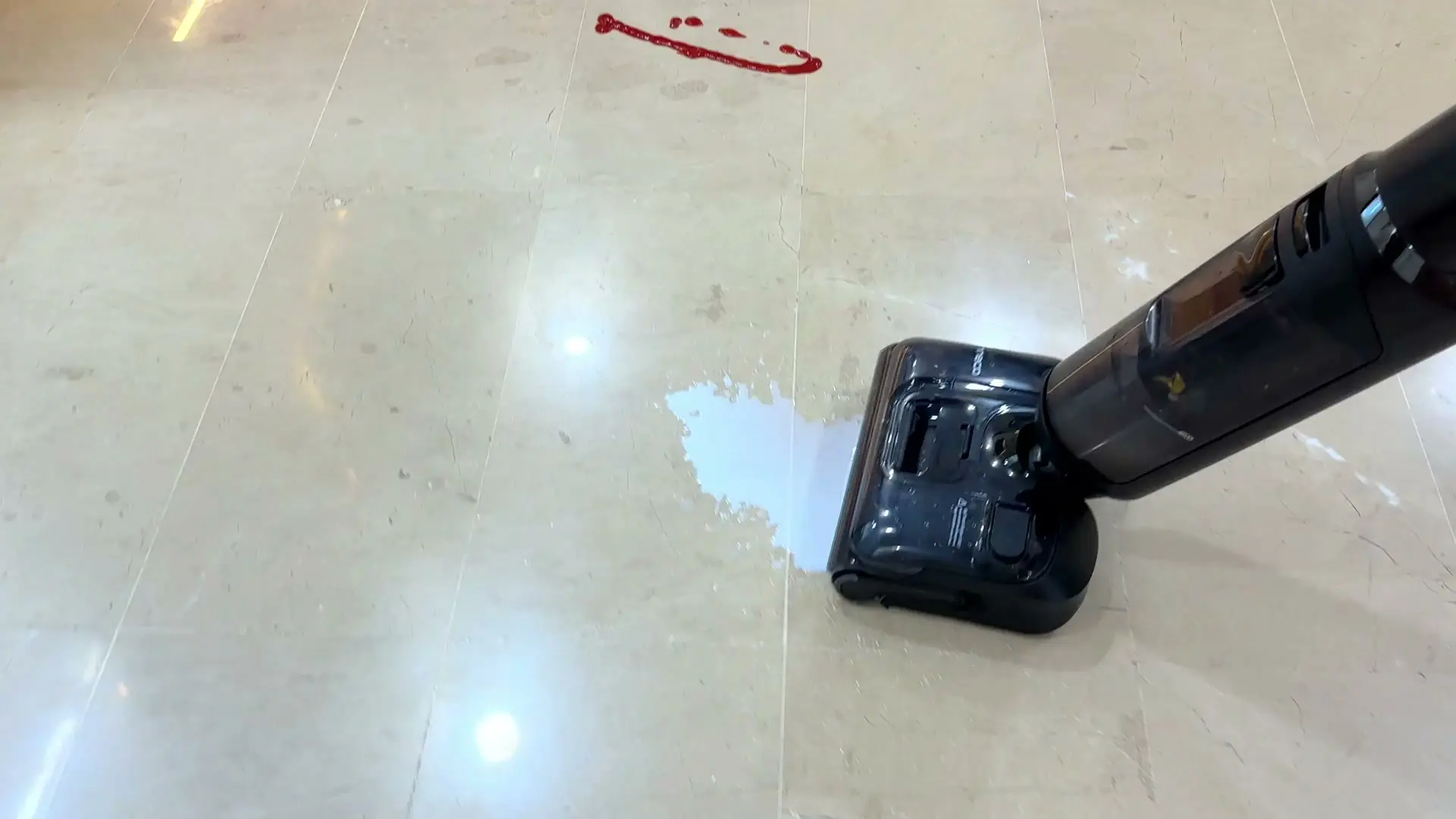
Tested side by side in a real family home with all-marble floors and young kids, focused on the everyday quick messes robot vacuums do not handle — milk, tea, ketchup and water spills, plus dry dust and debris. I compared daily handling and docks, cleaning on wet and dry mess, reach under furniture, the Dyson on a mattress, self-cleaning and maintenance, noise, and how long each lasted in normal use. I did not run a controlled battery-life test, a lab suction measurement, or long-hair/pet tangle testing, so I do not treat those as proven numbers here.
Verdict
For a hard-floor home that deals with wet spills as much as dry dust, the Tineco FLOOR ONE S7 Stretch Ultra is the one I reach for: one simple routine of clean, dock, empty and rinse, with a self-cleaning dock and voice prompts anyone at home can follow. The Dyson V15 Detect Plus is still the stronger tool for dry cleaning beyond the floor — mattresses, sofas, corners and stairs — and its laser genuinely reveals dust. But it asks more of you, and for the floors I actually clean every day, the Tineco won.
Pros
- Tineco cleans wet and dry mess in one pass — milk and ketchup came up on the first pass on marble
- Tineco's self-cleaning dock and hot-air drying leave the roller completely dry, and voice prompts make it easy for anyone at home
- Dyson is a genuinely powerful dry vacuum, and its green laser really does reveal fine dust on hard floors
- Dyson's range of heads makes it excellent beyond the floor — it pulled a surprising amount of dust out of our mattress
Cons
- Tineco can't scrape a stubborn dried-on mark, and oily residue took three or four passes
- Tineco lays flat to reach under a floating media wall, but still would not fit under a lower floating unit
- Dyson's charging stand routes a cable into it and feels less polished than the Tineco's dock
- Dyson's many heads and attachments get overwhelming — I kept checking which one to use
After living with both machines in a marble-floor home full of kids and daily spills, the Tineco FLOOR ONE S7 Stretch Ultra is the one I now reach for without thinking. The Dyson V15 Detect Plus is still the better tool the moment I need to clean a mattress, a sofa or the stairs — but for the floors I actually clean every day, the Tineco won.
We already run robot vacuums at home, so this was never about a scheduled deep clean. It was about the quick messes you want to handle right away: milk, tea, a smear of ketchup, a random spill on the marble. These two premium machines solve that in completely different ways. The Dyson is a powerful dry vacuum with a laser and a stack of attachments. The Tineco is a wet-and-dry floor washer that mops as it vacuums. You can watch the full video review for the side-by-side, but here is how living with both actually went.
Design, docks, and daily handling
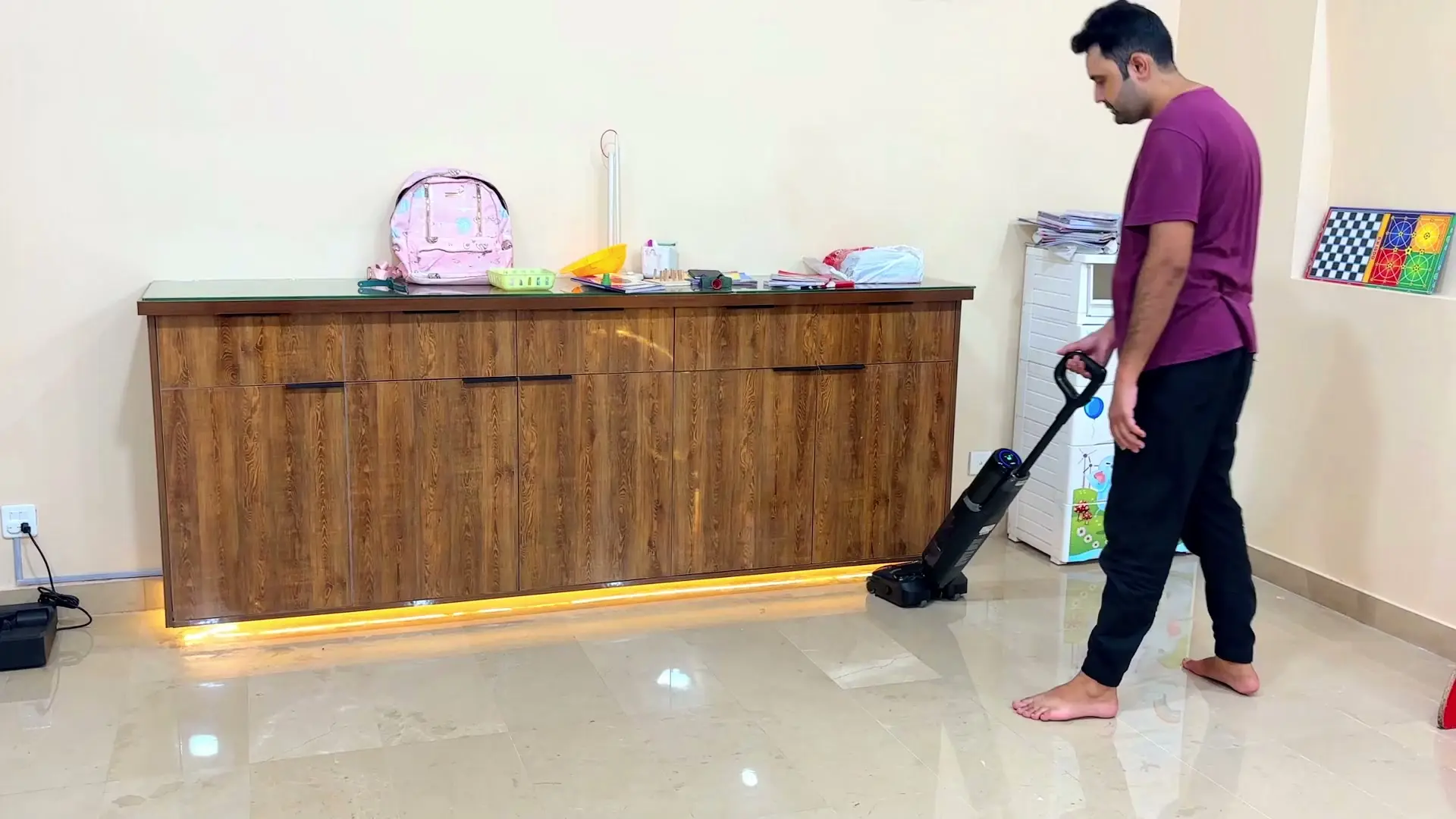
Both feel solid and genuinely premium, just balanced in different ways. The Tineco keeps its water tank low, so the handle never feels top-heavy while you clean, and bringing it upright to around 90 degrees stops it moving — a small touch I ended up appreciating. The Dyson has that almost gun-like design that is fun to hold, and the kids were definitely curious about it, but the Tineco feels like the more mature everyday appliance.
The docks are where the two philosophies really split. The Tineco has a proper dock: you just set it down and it charges and cleans itself, with no cable to plug in. The Dyson charges through a cable routed into its stand, and next to the Tineco's dock that arrangement feels more makeshift and a little dated. Setup was easy on both, but the Dyson also gives you a lot of heads and attachments, and that gets overwhelming fast — I kept looking at the pictures to work out which head belonged to which task. With the Tineco there is one routine: pull it off the dock, clean, put it back, then empty and rinse the tank. That simplicity is a big part of the appeal.
Cleaning performance on marble: wet spills and dry dust
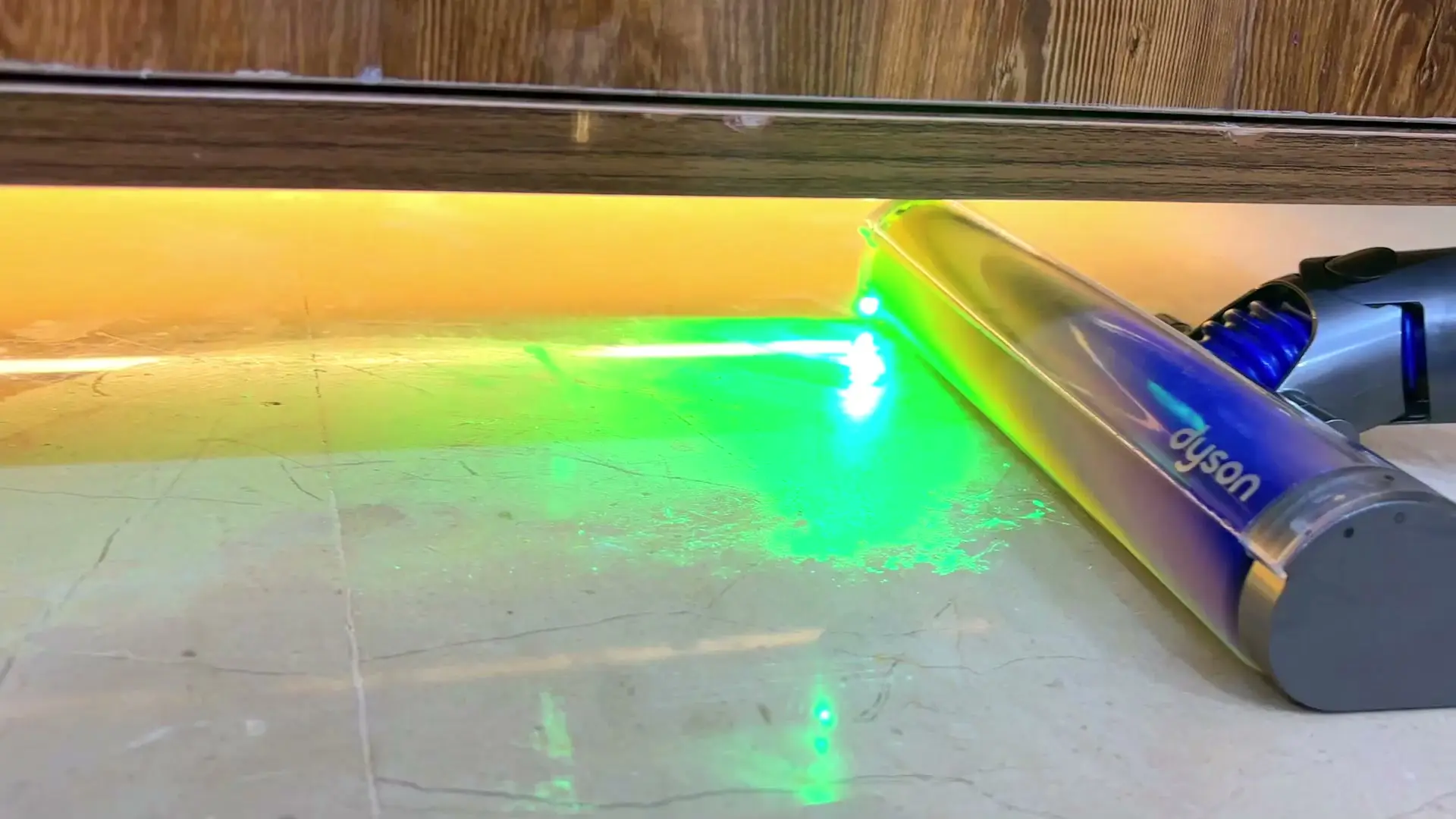
For plain dry debris, the win goes to the Dyson. It is a powerful dry vacuum, it is very good at lifting dust off the floor, and its green laser genuinely reveals fine particles you would otherwise miss on hard floors. If your daily problem is dry dirt, that is a real advantage.
But the moment water is involved, the Tineco changes the whole experience. Milk and ketchup came up on the first pass in my testing. Oily residue was harder — it took around three or four passes — and a very dry, hardened mark is the one thing it cannot handle, because it washes rather than scrapes. It also lays flat at 180 degrees, which let it reach under our floating media wall, though it still would not fit under a lower floating unit. So it reaches further than a rigid stick vacuum, but not into every gap. Along edges both machines did well.
Where the Dyson still wins: off the floor
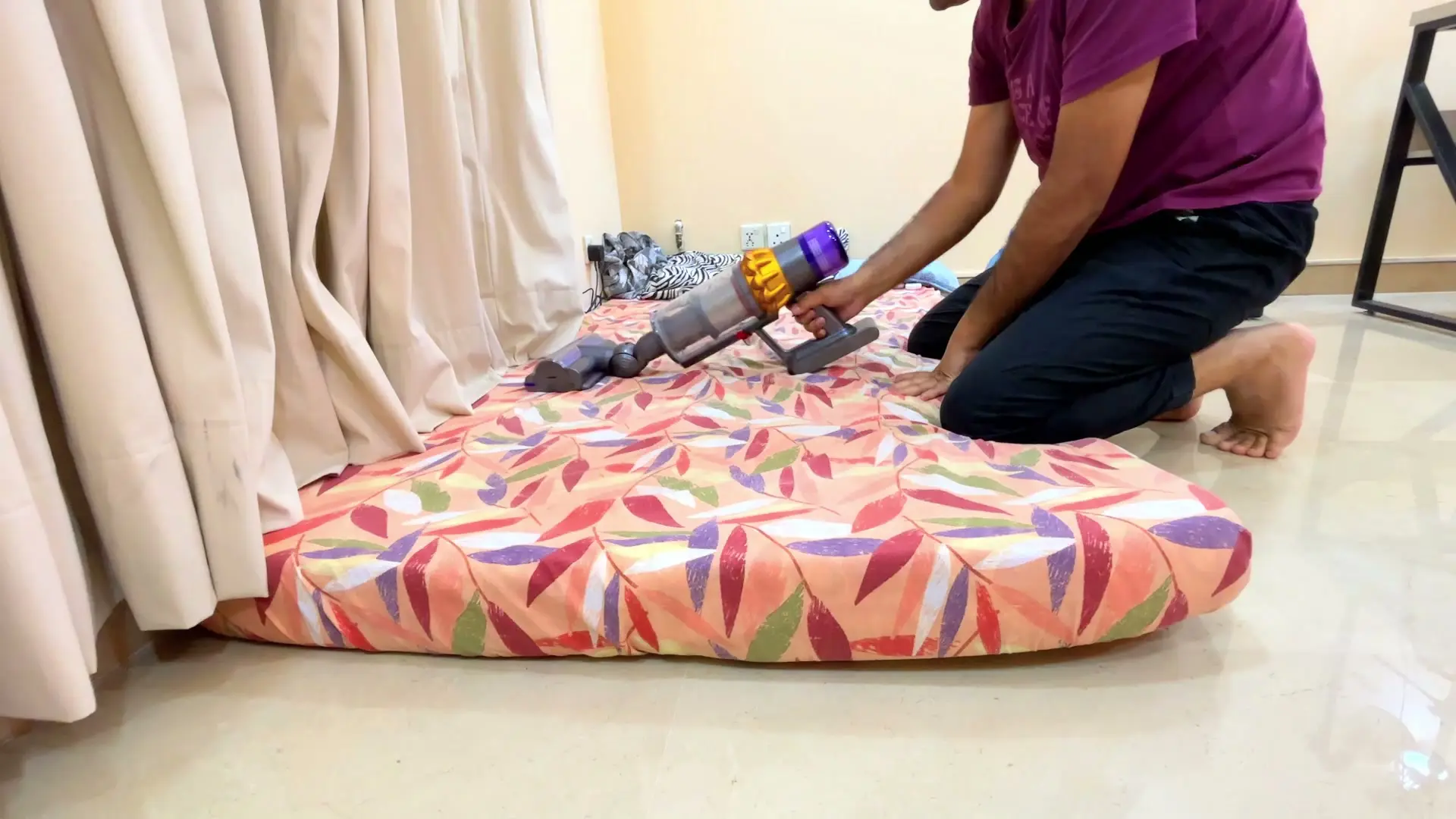
The Dyson's real strength shows up the moment you leave the floor. I ran its motorized head over our main mattress on a high-power setting, and it pulled out a genuinely surprising amount of dust. That same range of heads makes it useful for sofas, furniture, corners and stairs — the places a floor washer simply cannot go.
I just don't enjoy the process of deciding which attachment to use, finding it, and swapping it every time. If you want one machine for lots of different dry-cleaning jobs, that flexibility is worth it. For me, it wasn't, because what I mainly want is one simple machine for the floors I clean every single day.
Living with them: maintenance, noise, and runtime
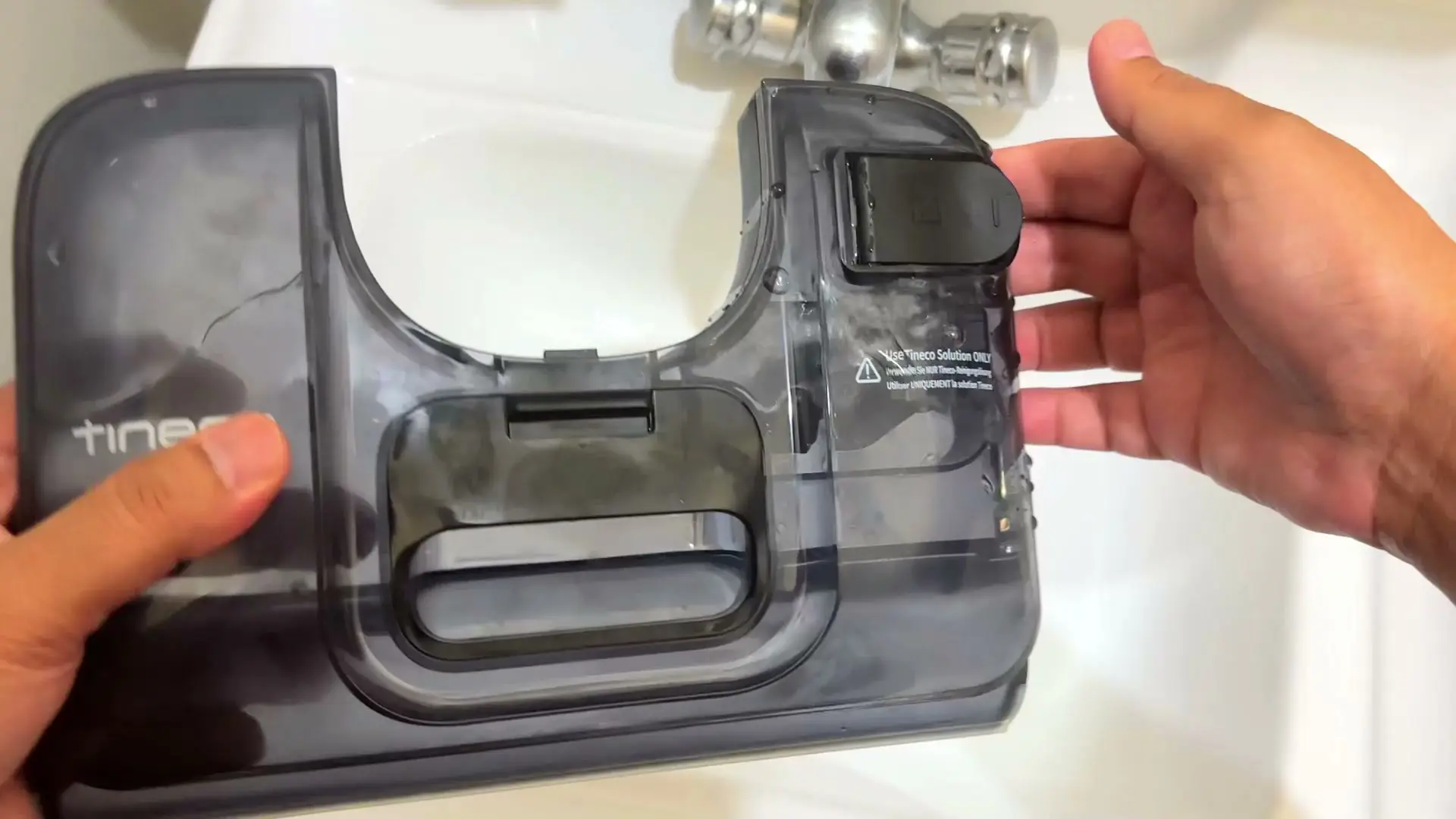
Maintenance is another reason the Tineco became my default. After cleaning, I empty the dirty-water tank, rinse it, and set the machine back on its dock, where it runs a self-cleaning cycle and hot-air drying. That drying took about five minutes in my testing, and when I lifted the roller afterward and rubbed it with paper, it came away completely dry with no droplets. The voice prompts help too — they tell you plainly when cleaning is done, when to empty the dirty water, and when something needs attention, which makes the machine easy for anyone in the house to use. The Dyson's bin-and-filter routine isn't difficult, but I find the Tineco's contained tank more straightforward and more pleasant to deal with.
Neither machine is quiet at maximum power — both can disturb people nearby, so Auto or Eco is the better balance for normal cleaning. The Tineco also lasted longer through my everyday routine. The Dyson ran out several times, but I was leaning on higher-power modes, so treat that as real-world impression rather than a controlled battery test. On hair, neither one tangled during my testing — the Tineco uses cutter-style blades and the Dyson uses anti-tangle combs — though very long hair could behave differently. There is also a Tineco app, mainly useful for firmware updates.
Which one I'd actually buy
If your home is mainly hard flooring — especially marble or wood — and you regularly deal with wet spills as well as dry dirt, I would choose the Tineco without hesitation. It gives me one simple loop: pull it out, clean the mess, dock it, empty and rinse the tank. With four kids and marble floors throughout, that is exactly the machine I want, and it is the one I keep reaching for.
The Dyson is still a strong choice if your priority is dry cleaning across sofas, mattresses, furniture, corners and stairs. It is the more flexible specialist. The Tineco is the better everyday cleaner for the way I actually live.
Where to buy
This article contains affiliate links. If you buy through them, I may earn a commission at no extra cost to you.
Is this for you?
Who it’s for
People with mostly hard floors — especially marble or wood — who deal with wet spills as often as dry dust, want one simple grab-and-go routine, and value a self-cleaning dock and clear voice prompts a whole household can follow.
Who should skip it
Skip the Tineco as your main machine if your home is mostly carpet, sofas and stairs, if you need to lift dust from mattresses and furniture, or if you want one vacuum for many dry-cleaning tasks — that is where the Dyson's flexibility is worth the extra steps.
Watch the review
Open on YouTubeDisclosure
Hero and evidence images are original Tech With RR footage, captured firsthand during hands-on testing of the Tineco FLOOR ONE S7 Stretch Ultra and the Dyson V15 Detect Plus.
This review contains an affiliate link. See our affiliate disclosure for details.